Weight Moved? What Alterations Can and Cannot Rescue
Your body changed and your favourite suit no longer fits. Two Tailor's head seamstress explains what alterations can save and when to retire a garment.
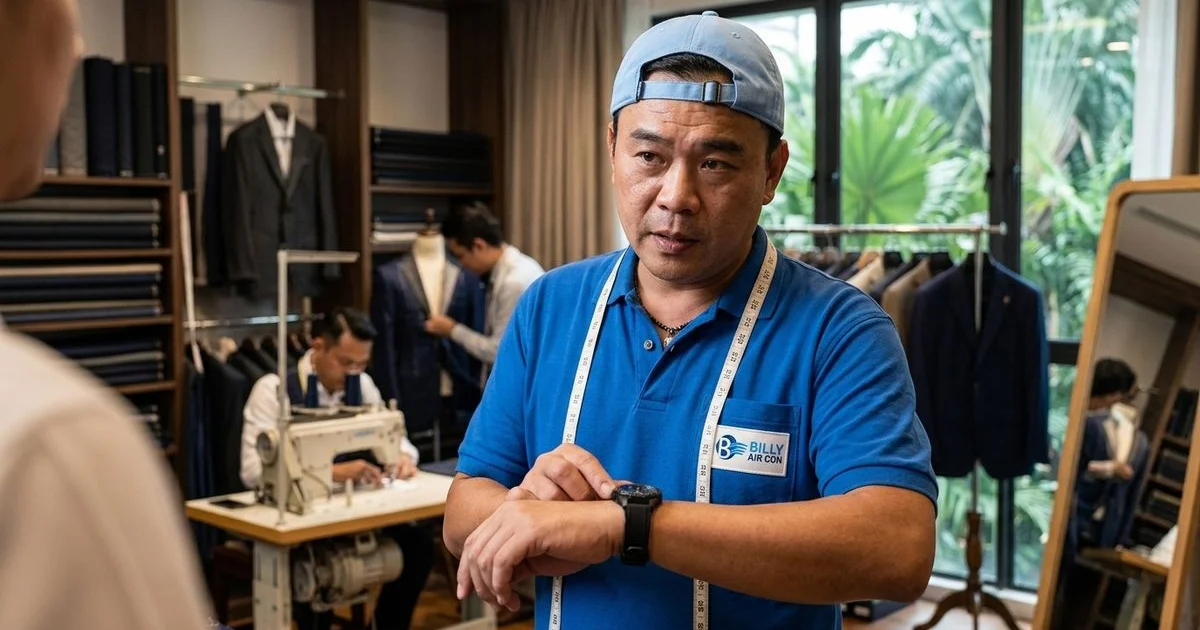
You pull on a favourite jacket before an important meeting at Damansara Uptown, and something is wrong. The shoulders are pulling. The trousers cut into your waist, or the seat suddenly feels like a parachute. After eighteen months of late-night mamak runs in Section 17, or a serious gym phase at a Bandar Utama studio, the suit you bought two years ago no longer fits the body wearing it.
I see this every week at our SS2 studio. The first question is usually “can you save it?” The honest answer depends on which way the body went, by how much, and how the suit was originally built.
This article walks through what is genuinely fixable, what hits a structural wall, and how to make a sound financial decision about your existing wardrobe.
A New Section: Four Questions I Ask Before Picking Up the Scissors
When you bring a suit in for an audit, my cutters work through these four pillars before committing to any alteration.
1. The Magnitude of Change
How much weight has actually moved? Alterations are typically viable for changes of 4 to 7 kilograms. Shifts of 9 kilograms or more usually change body geometry too much for a standard alteration to absorb.
2. Where the Change Occurred
Weight in the midsection is often fixable. Gains in the neck, shoulders, or thighs are much harder to accommodate, because those areas have complex structural points.
3. Construction Tier
A fully canvassed suit is built to be altered. Fused or glued suits (common in the RM800 to RM1,500 range) often pucker or disintegrate when we try to move major structural seams.
4. Fabric Integrity
I hold the trousers up to a strong light and inspect the seat and inner thighs. If the cloth is thinning or shiny at stress points, RM400 in alterations is throwing good money after bad.
Direction Matters More Than Magnitude
Before we look at specific alterations, think about which direction your body moved. Weight loss and weight gain are not symmetrical problems for a seamstress. Taking cloth in is almost always easier than letting cloth out, because letting out depends entirely on whether the original maker left any fabric to work with.
This single distinction explains 80% of what follows.
Weight Loss: Bringing Things In
If you have lost weight, you are in a much better position than most clients who walk through our door.

The Five-Centimetre Safe Zone
Taking in the jacket body. We typically reduce a jacket’s circumference by working the side seams. Most senior cutters agree that around 5 cm (about 2 inches) is the safe maximum for waist reduction. Going beyond that often migrates the side pockets toward the back, ruining the visual balance of the silhouette.
Trouser Waist
Taking in the trouser waist. The most common fix we perform. A reduction of 4 to 5 cm at the rear centre seam is standard and safe. Anything more than 7 cm usually requires “recutting” the trouser, which means removing the waistband and pockets entirely. That is labour-intensive work, around RM250 to RM400 in our atelier.
Leg Tapering
Tapering trouser legs. Modern silhouettes favour a cleaner line, and weight loss is often the trigger to update an older cut. If your legs have slimmed, we can taper from the inseam to remove that “excess fabric” feel, balancing the new leg width against the hem.
Shirt Adjustments
Taking in shirt bodies. A high-value alteration. Custom or quality off-the-rack shirts can be darted or taken in at the side seams to eliminate billowing fabric.
Where Limits Start
Shoulder width. The jacket hangs from the shoulders. If yours have shrunk, the jacket droops off your frame, and we rarely recommend narrowing them. The cost (around RM450 and up) and the structural risk are both high.
Jacket length. Shortening is possible but risky. Removing more than 2 cm often throws off the button stance and leaves the pockets sitting too close to the hem.
Sleeve pitch. Weight loss changes posture. If sleeves start “rotating” forward, fixing the issue means removing and resetting the sleeve, which is advanced surgery.
Weight Gain: Letting Things Out
Adding muscle or a few lifestyle kilograms is the trickier scenario. You are entirely dependent on what the original maker chose to leave inside the seams.
Inlay Allowance
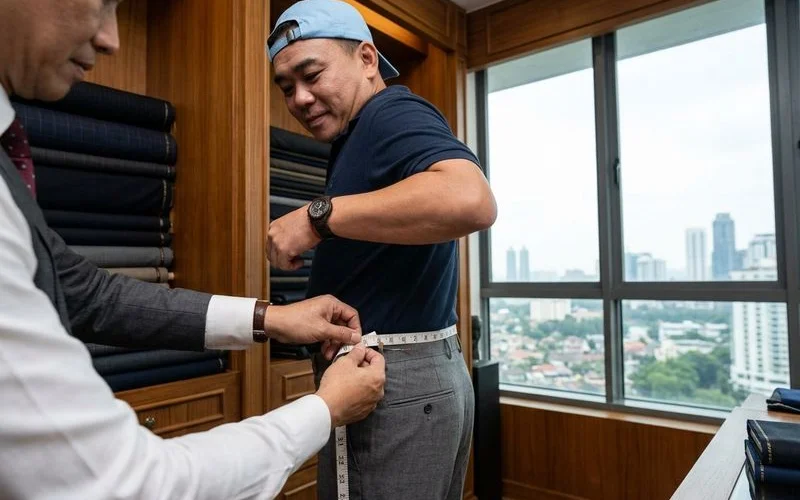
Letting out jacket seams. We need to open the lining to inspect the seam allowance, the extra fabric folded inside. High-end Italian and British mills, and any properly bespoke commission, leave 1.5 to 2.5 cm of cloth at critical seams. Mass-market brands typically leave nothing, which makes expansion impossible.
Trouser Waist Expansion
Letting out the waist. The back centre seam is your best hope. Most quality trousers have enough cloth to gain 2.5 to 4 cm in the waist.
The Ghost Stitch Risk
Check for fade lines. Even if cloth is available, the original seam may have left a permanent mark. Dark navy and charcoal wools are notorious for showing “ghost stitch” lines where the original seam was. In Selangor afternoon sunlight, those lines look unprofessional.
Where It Rarely Works
Significant expansion. Trying to gain more than 4 cm distorts the drape. The cloth pulls at the buttonhole, creating that familiar “X” crease across the stomach.
Chest expansion. The chest piece is the heart of the suit’s structure. Jackets generally cannot be let out in the chest area because the canvas and lapel construction are fixed in place.
Shoulder expansion. Effectively impossible. If the jacket is tight across your upper back or deltoids, no amount of stitching can create cloth that does not exist.
A Local Insight: Why PJ Lifestyle Patterns Affect This Conversation
Here is something I discuss with almost every client. Petaling Jaya professionals tend to gain or lose weight in fairly specific patterns, driven by long commutes on the Federal Highway, lots of restaurant meals during client lunches, and gym cycles at studios near Mutiara Damansara and Bandar Utama. The result is that midsection changes are the most common adjustment we perform, followed closely by leg tapering after a serious training phase.
Knowing the local patterns helps us design alterations that anticipate further small changes, rather than locking the suit into one rigid measurement.
Realistic Cost and Outcome Expectations
I prefer to be blunt about return on investment.
Best case: You have a high-quality wool suit and need the waist taken in 4 cm. Result: the suit looks brand new. Cost: roughly RM200 to RM350.
Moderate case: You need the jacket sides tapered and the trouser waist let out to its limit. Result: a wearable suit that looks 90% perfect. Cost: roughly RM400 to RM700.
Challenging case: You need shoulders narrowed or significant length changes. Result: a jacket that fits “technically” but may look slightly off-balance. Cost: RM800 and up.
Not feasible: The change is too dramatic, or the ghost stitch lines are visible. Result: a garment you will never feel confident wearing.
Quick Verdict Table
| Alteration Type | Estimated Cost (PJ) | Verdict |
|---|---|---|
| Simple Hem / Waist | RM150 to RM280 | Keep. High value |
| Taper Jacket Sides | RM250 to RM450 | Keep. Transforms the look |
| Recut Trousers | RM350 to RM600 | Review. Only for suits valued over RM4,000 |
| Shoulder / Collar | RM550 to RM900+ | Replace. Put this money toward a new suit |
Why Bespoke Construction Pays Dividends
This is exactly where investing in a bespoke commission earns back its premium over the years.
- Patterns on file. If Two Tailor made the original suit, we still have your unique paper pattern. We can often recut for new measurements and even rebuild parts of the suit if cloth was reserved.
- Generous inlays. Bespoke construction includes extra fabric at critical seams, anticipating the natural changes a body goes through over a decade.
- Resilient cloths. Premium worsted wools (Super 110s to 130s) press and steam beautifully, hiding signs of alteration much better than synthetic blends.
- Ongoing relationship. We track your fit history. Knowing how your posture has shifted over time allows micro-adjustments that off-the-rack tailors cannot replicate.
When to Buy New Instead
Sometimes the smartest business decision is to cut your losses.
- If alterations cost more than 50% of the garment’s current value, buy new.
- If the result will leave you constantly second-guessing the fit, it will quietly drain your confidence.
- If your weight is still actively changing, wait until you have been stable for three months. Altering a suit twice weakens the cloth integrity at every stitch removal.
How to Bring Your Suit In
Schedule an alterations appointment at our Petaling Jaya atelier and we will follow a strict protocol.
- Interior inspection. We open the lining to verify available seam allowances.
- Fit analysis. You try the suit on so we can pin problem areas in real time.
- Feasibility check. We discuss the structural limits in plain language.
- Transparent pricing. You get a line-item quote before we cut a single thread.
- Honest verdict. We tell you if the suit belongs in the donation bin.
There is no obligation to proceed. Our goal is to make sure you look impeccable, whether that means saving an old favourite or helping you commission something new. Schedule your alteration consultation and let us see what is possible with your existing wardrobe.
Sarah Lee
Expert insights from the Two Tailor tailoring team in Petaling Jaya.