Should You Save This Suit? An Alteration Decision Framework
Not every old suit deserves saving. Two Tailor's head seamstress shares the framework we use to decide when alterations make real financial sense.
Every week at our SS2 studio in Petaling Jaya, a client walks in carrying a suit on a hanger and asks the same question. “Can you save it?” Sometimes the answer is yes. Sometimes it is “we can, but you really should not”. And occasionally the honest answer is that the garment has lived a good life and it is time to retire it.
Many tailors will say yes to anything because alteration work pays the bills. At Two Tailor we take a different view. A bad alteration recommendation costs you money today and disappoints you tomorrow, and the long-term value of our atelier depends on you trusting our judgement. My job as head seamstress is to tell you the truth, even when it means losing a ticket.
Here is the framework we use when assessing whether a garment is worth saving.
A New Section: The Three-Question Gate
Before we even unzip the garment bag, I run through three gate questions with the client. If any of the answers is a firm “no”, the remaining analysis usually does not matter.
- Will you actually wear this? Alterations on something that lives at the back of your wardrobe are wasted ringgit. Be honest.
- Do you actually like the style? Altering the fit does not change the colour, the pattern, or the cut philosophy.
- Is this garment reasonably well-made to begin with? A fused RM800 suit from a pop-up store is rarely worth rescuing regardless of how much we take it in.
When all three answers are “yes”, we move on to the cost analysis.
The Cost-to-Value Ratio
Begin with simple math. Compare what the alterations will cost against what the garment is worth.
We apply something close to the “50% rule” used in asset management. If the cost of a repair exceeds 50% of a garment’s current replacement value, the investment is rarely worth it.
A few examples in current Klang Valley pricing:
- RM800 in alterations on a RM400 off-the-rack suit. Almost never a smart use of money.
- RM250 on a RM5,000 bespoke commission. Absolutely worth it. You are protecting a long-term asset.
- RM350 on a RM1,500 suit you genuinely love and wear weekly. Consider it carefully against how often you actually reach for it.
Two intangibles also matter.
Sentimental value. A grandfather’s wedding suit has worth beyond its market price. A careful restoration can be the right call even if the cloth itself is modest.
Irreplaceability. A vintage cloth from a discontinued mill or a hard-to-find pattern can justify a significant alteration budget. Scarcity is real.
Alterations That Reliably Earn Their Keep
Some adjustments deliver dramatic improvements with strong return on investment. These are the ones I recommend without hesitation.
- Hemming trousers. A standard RM60 to RM100 alteration. Mandatory for any suit you intend to wear regularly.
- Taking in a jacket waist. When the shoulders fit but the body is too full, waist suppression transforms the silhouette. RM180 to RM300 in our atelier, depending on construction.
- Shortening sleeves. Proper sleeve length makes any jacket look noticeably more expensive. RM120 to RM250.
- Tapering trouser legs. Modern slim cuts age out baggy trousers from previous decades. RM150 to RM280 to update the leg width and extend the suit’s relevance.
These all work because they adjust areas where the original construction anticipated change. Seam allowances exist for exactly this purpose.
Quick ROI Reference
| Alteration Type | Estimated Cost (PJ) | Visual Impact | Verdict |
|---|---|---|---|
| Hemming Trousers | RM60 to RM100 | High | Essential |
| Waist Suppression | RM180 to RM300 | Very High | Recommended |
| Sleeve Shortening | RM120 to RM250 | High | Recommended |
| Tapering Legs | RM150 to RM280 | Medium | Style dependent |
Alterations With Hard Limits
Some adjustments are technically possible but come with strict constraints, and the result depends entirely on the original construction.
- Letting out a jacket. Only possible if seam allowances exist, and only up to the amount the allowance permits. Most Italian and British mills leave 2 to 3 cm. Mass-market brands often leave nothing. Watch for fade lines where the original seam was, since dry cleaning sets the dye unevenly.
- Shortening a jacket. Possible, but it changes the proportion between pockets, button stance, and hem. Removing more than 2 cm usually throws off the visual balance.
- Shoulder narrowing. Doable, but expensive and complex. The labour often exceeds RM400, and the results vary by jacket construction.
- Taking in trouser waist. Limited by the back seam and pocket placement. A reduction of more than 5 cm often pushes the back pockets toward the centre, and the aesthetic suffers.
For these, a skilled cutter assesses your specific garment and tells you what is realistic.
Alterations That Are Almost Never Worth It
Some requests come up often, and I usually advise against them.
- Widening shoulders. Effectively impossible without rebuilding the entire jacket from scratch.
- Significant size changes. Taking in 10 cm or letting out 8 cm distorts the proportions even when the seams technically allow it.
- Fixing poor original construction. If a jacket was made cheaply, alterations are a band-aid.
- Completely restyling a jacket. Converting double-breasted to single-breasted, or removing peaked lapels, requires building a new jacket.
A Local Expert Insight: The PJ Fabric Stress Test
Here is a habit I always perform before quoting any alteration at Two Tailor. I hold the trousers up against a strong light and inspect the seat, inner thighs, and elbows. Petaling Jaya humidity and aggressive dry cleaning accelerate fibre wear in ways many clients never notice. A suit that looks fine in dim light can be paper-thin under direct sun.
If I see shine, thinning, or visible fibre breakdown at stress points, I will tell you the truth. Investing RM300 in alterations on a garment whose cloth has six months of life left is throwing good money after bad.
What an Assessment Actually Looks Like at Our Studio
Here is what an alteration consultation looks like when you bring a garment in.
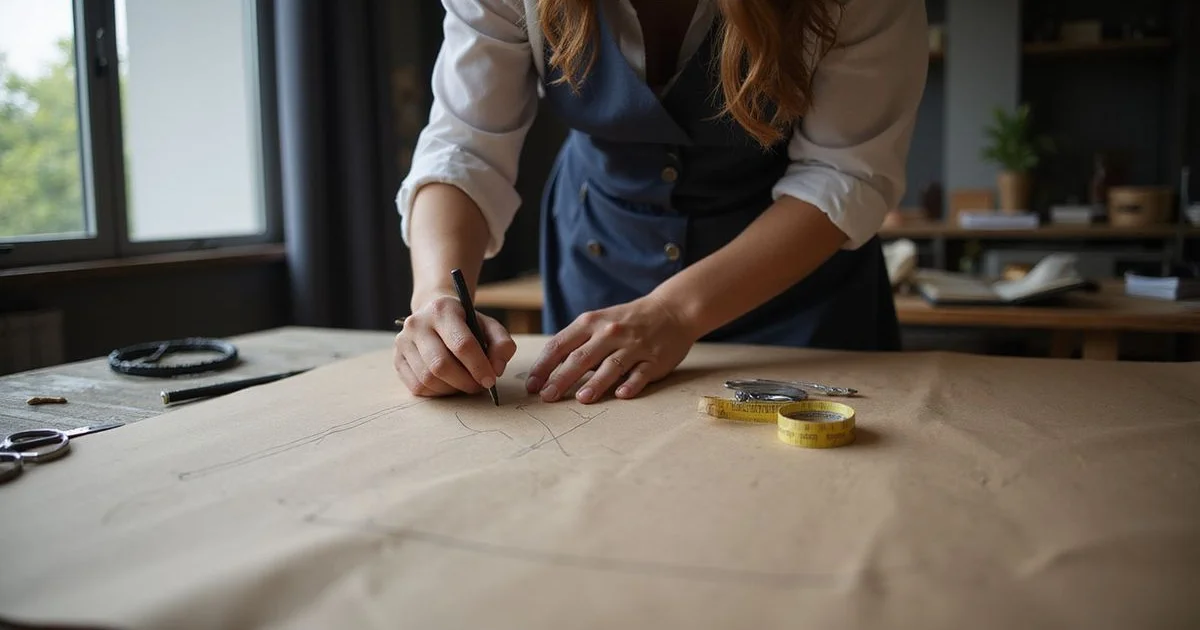
We examine the construction, cloth condition, and seam allowances. We try the garment on you and pin the problem areas in real time. Then we tell you four things in plain language:
- What can be done.
- What it will cost.
- What the realistic outcome will be.
- Whether we genuinely think it is worth doing.
Sometimes the answer is “yes, absolutely”. Sometimes it is “we can improve it, but it will not be perfect”. And occasionally it is “honestly, you would be better off putting this money toward something new”.
When to Seek a Tailor’s Opinion
Bring the garment in when you genuinely need a professional audit. Specifically:
- You cannot tell whether the cloth has enough life left.
- You are unsure what alterations are physically possible given the construction.
- The sentimental or monetary value is meaningful.
- You have been frustrated by fit issues but love the garment too much to retire it.
A good tailor acts as a consultant first, not a salesperson. At Two Tailor, our alterations service prioritises long-term satisfaction over a quick invoice.
That kind of straight talk is what every Petaling Jaya client deserves. Bring your garment in and let us tell you the truth about whether alterations make sense for your wardrobe.
Sarah Lee
Expert insights from the Two Tailor tailoring team in Petaling Jaya.